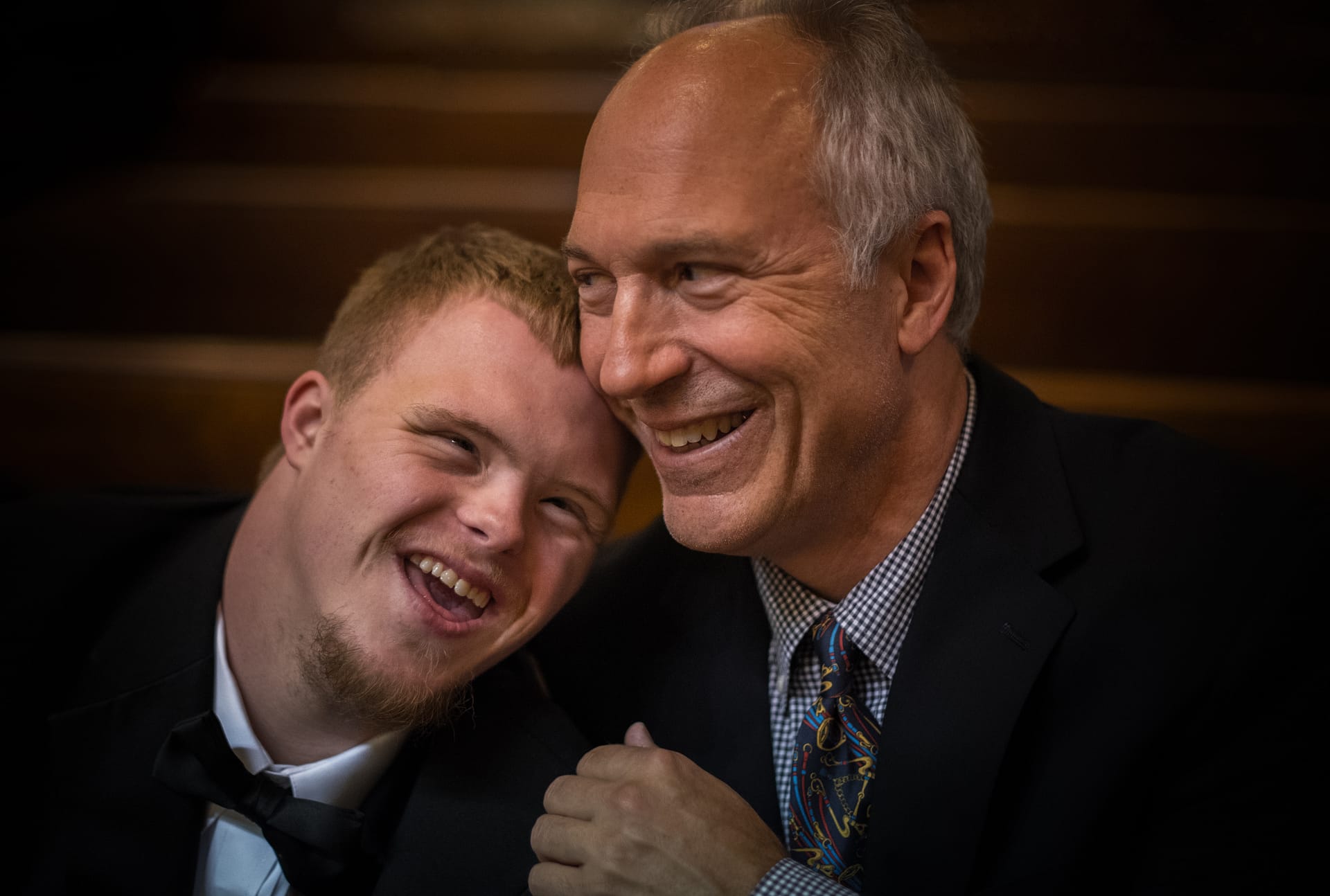
Tag: lawyer

  • How Asking for Help Holds The Key to a Strong Caregiver Team

    How Asking for Help Holds The Key to a Strong Caregiver Team

    Chances are you’ve been caring for your child with special needs for so long, that it can be hard to seek help because 1) you don’t have time to find and train someone, and 2) you feel that no one else is going to care for your child as much or as well as you do. Yet asking for help not only gives you much-needed support, but it also ensures your child will have time to get accustomed to being cared for by others if and when you’re no longer around to personally provide that care.

    As important as those reasons are, they’re still not the most important reason to ask for help. The most important reason to ask for help is to begin training your child’s future primary caregiver. 

    As the primary caregiver for your child with special needs, you’ve likely been through some trials, and with them, you’ve identified your child’s support needs and connected with resources to help you find that support.  

    But what you may not have thought of is making sure that your successor caregivers and child with special needs are also connected to your support network and ready for the eventual transition in caregivers when you can no longer act as the primary caregiver of your child.

    Who Steps In When You Can’t Be There?

    Imagine that you’re suddenly no longer able to care for your child with special needs due to your own disability or death. You probably have a successor primary caregiver in mind – perhaps your child’s sibling, aunt, uncle, cousin, or close family friend. You may have even named a backup conservator or guardian, or your loved one with special needs may have named a successor caregiver in a power of attorney. 

    Now, imagine that you haven’t practiced asking for help during your healthy years. After all, once you develop a routine of providing support to a person with special needs, it can take more effort to train someone else to assist you. 

    But unfortunately, this makes it easy to fall into the admirable, but ultimately harmful, habit of self-reliance. It feels good in the short term to be the only person who knows how to care for your loved one just right, but this doesn’t serve them well long-term. Most individuals with special needs struggle with change, so the more gradual a transition in caregiving can be, the smoother the process will be for everyone.

    Holding the bulk of the responsibility for your loved one’s care can also cause burnout and increase the likelihood your successor will be overwhelmed with tasks that have become routine for you. Plus, since this successor is likely someone close to you, chances are that they will either be in the grieving process after your death or, if you’ve developed a disability yourself, in a dual caregiver role of caring for both you and your loved one with special needs. 

    At best, the successor caregiver can be under immense stress that negatively impacts family relationships and careers. At worst, your loved one with special needs could unnecessarily end up in institutional or agency care when they would be better served at home.

    Experience for Your Care Team, Respite for You

    Asking for help caring for your loved one with special needs doesn’t just provide a much-needed break for you. It also provides your successor caregivers with experience in the greater caregiving roles they’ll play in the future. 

    If you’ve set a clear example of asking for the help you need, at least one person will gain some experience dealing with Social Security and Medi-Cal agencies, and someone will have assisted with insurance companies and healthcare providers. By having a successor caregiver at least observe your caregiving activities once or twice a year, they will know exactly where the necessary contact information and legal documents are located to enable this critical work. 

    Beyond these essential basics, getting your support team acquainted with your loved one’s routine early on will provide your loved one with a greater quality of life even in your absence. During this time, they will benefit from continuity in their daily activities while becoming more familiar with their other caregivers. 

    In addition, by routinely gathering input from your support team in your decision-making processes, you will model a process for future caregivers on how to receive input and make decisions for your loved one – or support your loved one with special needs in making those decisions for themselves.

    Supporting You and Your Network at Every Stage

    As you model asking for bits of help now from the people you trust, you’re setting the example of self-care for future caregivers and giving them experience caring for your loved one now. By doing this, you’ll also find the weak spots in your support team where more training or familiarity with your loved one’s care routine may be needed. This translates directly into better health and quality of life for your loved one with special needs.

    We can help you identify the support roles that you and your loved one need, and the best persons or agencies to fill each role. We’ll also ensure you have at least one backup person for each role and can help you design a plan for how these support roles work together for your loved one’s benefit. We’ll guide you from the beginning to implement a plan now, train your support team for the future, and give you some well-deserved breaks in the meantime.

    Contact our office to learn more about how we can guide you in asking for help and setting a positive example for your support team. We look forward to putting our experience – and the experience of our mentors and other clients – to work for your family, especially your loved ones with special needs and their caregivers, both now and in the future.  

    This article is a service of Jeannette Marsala, Personal Family Lawyer. We don’t just draft documents; we ensure you make informed and empowered decisions about life and death, for yourself and the people you love. That’s why we offer a Life & Legacy Planning Session, during which you’ll get more financially organized than you’ve ever been before and make all the best choices for the people you love. You can begin by calling our office today to schedule a Life and Legacy Planning Session and mention this article to find out how to get this $750 session at no charge.

  • Year-End Tax Planning Starts Now: 8 Things to Do Now to Lower Your 2023 Taxes – Part 1

    Year-End Tax Planning Starts Now: 8 Things to Do Now to Lower Your 2023 Taxes – Part 1

    It might seem a bit early to think about your 2023 taxes, but as the year draws to a close, it’s the perfect time to take a closer look at your financial situation and make some strategic moves that can help you minimize your tax liability come April.

    Year-end tax planning isn’t something you do at the last minute; it’s a series of thoughtful steps you can start taking right now. In this blog series, we’ll explain eight key actions you can take during this last quarter of the year to save money on your 2023 taxes.

    Let’s get started.

    Contribute to Your HSA (Health Savings Account)

    A Health Savings Account (HSA) can be a powerful tool for both managing your healthcare costs and reducing your taxable income. HSAs allow you to set aside pre-tax dollars to cover future qualified medical expenses. Contributions to your HSA are tax-deductible, and the earnings grow tax-free. To make the most of this tax-advantaged account, consider maximizing your contributions to your HSA before the year ends.

    For the 2023 tax year, you can contribute up to $3,650 if you have self-only health insurance coverage or $7,300 for family coverage. If you’re 55 or older, you can also make an additional $1,000 catch-up contribution. By increasing your HSA contributions, you not only reduce your taxable income this year but also build a valuable fund for future healthcare expenses.

    If your employer offers an HSA account, they may make an annual contribution to the account. If you’re self-employed or don’t have access to an employer-sponsored HSA, you can set up your own through most financial institutions.

    Even better, the money you contribute to your HSA never expires and can be used years into the future. Just keep in mind that if you’ve taken money out of your HSA this year to pay a medical expense, that withdrawal will be counted as income on this year’s income tax return. 

    Contribute to a 529 College Fund

    If you have aspirations of sending your children or grandchildren to college, establishing or contributing to a 529 college savings plan is a strategic financial move. While contributions aren’t deductible on the federal level, any earnings in the account grow tax-free as long as they’re used for qualified education expenses.

    In 2023, you can contribute as much as you like to a 529 plan, but contributions above $16,000 per year ($32,000 for married couples filing jointly) may be subject to gift tax. Nevertheless, contributing now can help you leverage potential state tax deductions while investing in your loved ones’ future education.

    Not sure your child or grandchild will attend college? Funds in a 529 account can also be used for vocational and trade school tuition and fees or elementary and high school tuition costs.

    Adjust Your Tax Withholdings

    If you’re an employee, form W-4 determines how much income tax is withheld from your paycheck each month. It’s essential to review and, if necessary, update your withholding information, especially if you’ve experienced significant life changes such as marriage, divorce, the birth of a child, or changes in your income during the year.

    Adjusting your tax withholdings can help you avoid overpaying taxes throughout the year, leaving you with more money in your pocket. On the other hand, failing to update your W-4 could result in underpaying your taxes, which means needing to make a tax payment instead of receiving a refund come tax season, as well as potential penalties. Consult with a tax professional or use the IRS’s online withholding calculator to determine the correct withholding for your specific circumstances.

    If you work as a 1099-independent contractor or own a business, you should meet with your tax professional to determine if you need to make any changes to the structure of your business, or establish retirement accounts, before the end of the year. If you need help knowing what to bring to your tax professional, or how to ask the right questions, give us a call

    Schedule Medical Procedures Strategically

    Medical expenses can add up quickly, and the tax code provides a deduction for qualified medical expenses that exceed 7.5% of your adjusted gross income (AGI) for the 2023 tax year. To maximize your deduction, consider scheduling necessary medical procedures before the year ends.

    While not every medical need can be planned ahead of time, if you know you’ll need or want an elective surgery, try to schedule it before December 31. Similarly, if you’ve met your out-of-pocket maximums for health or dental insurance, now is the time to get all members of your family in for any remaining check-ups or follow-up procedures.

    If you don’t think they’ll meet the threshold for medical deductions this year but anticipate a large medical bill like a birth or surgery next year, consider delaying any unnecessary medical work until January to take advantage of the medical expenses deductions next year.

    Be sure to keep detailed records of your medical expenses, including bills, receipts, and insurance statements, to support your deduction claims.

    Looking Out for Your Family and Your Finances

    Looking at your finances and seeing where you can save money on your taxes isn’t just about finishing the year off strong and getting organized for tax season. It’s about making strategic moves that position you for success now and help protect and support your loved ones in the future. 

    To make sure your family is cared for no matter what the future holds, schedule a complimentary call. We’d be happy to talk with you about how we guide our clients to create a plan that protects their assets and their family for years to come.

    And don’t forget to tune in for part two of our year-end tax planning series, where we’ll explore even more strategies to help you keep more of your money where it belongs – in your pocket. 

    This article is a service of Jeannette Marsala, Personal Family Lawyer. We don’t just draft documents; we ensure you make informed and empowered decisions about life and death, for yourself and the people you love. That’s why we offer a Life & Legacy Planning Session, during which you’ll get more financially organized than you’ve ever been before and make all the best choices for the people you love. You can begin by calling our office today to schedule a Life and Legacy Planning Session and mention this article to find out how to get this $750 session at no charge.

  • Flu Season Fundamentals: How to Keep Seniors Safe This Fall

    Flu Season Fundamentals: How to Keep Seniors Safe This Fall

    The fall season is a beautiful time of year, but it also marks the beginning of flu season, which can pose a serious threat to your elderly loved ones. Fortunately, there are several steps you can take to ensure their well-being during the colder days ahead, including making sure you’re able to step in and help them with their medical and financial needs.

    Keep reading to find out how.

    1 | Create a Power of Attorney For Healthcare

    A power of attorney (POA) for healthcare (sometimes called a medical power of attorney) is a legal document that authorizes someone you trust to make medical decisions for you if you’re unable to do so yourself. If your senior loved one still needs to get a POA for healthcare in place, now is the time to create one. 

    If they do have a POA for healthcare, but it’s been a while since they created it, it’s time to review it to ensure it accurately reflects their current medical wishes and appoints a trusted individual as their agent for making healthcare decisions on their behalf. 

    Having a POA for healthcare in place for your senior can provide peace of mind knowing that you or another trusted person can immediately step in and care for them during times of illness or incapacity, such as a severe case of the flu or pneumonia. A POA for healthcare can also be used if you need to make a medical decision for your loved one during surgery or if they develop long-term memory problems. 

    Important: ensure that the POA for healthcare for your senior loved one (or yourself) includes “living will” provisions either included in the POA or in a separate document, stating not just WHO should make decisions for you or your loved one, but how you would want those decisions to be made.

    2 | Sign a HIPAA Waiver

    Health Insurance Portability and Accountability Act (HIPAA) regulations are in place to protect an individual’s medical information. However, during flu season, it’s important to have the ability to communicate with your senior’s doctors to stay informed about their health.

    A signed HIPAA waiver allows healthcare providers to share medical information with the individuals they’ve authorized to receive it. This can be crucial for keeping family members and caregivers in the loop about your senior loved one’s health status and treatment plans. 

    Whether your senior is feeling too ill to call their provider or needs help understanding their doctor’s instructions, a HIPAA waiver allows you to speak directly to your loved one’s provider to make caring for them as quick and easy as possible.

    3 | Schedule a Check-Up

    Before flu season is in full swing, it’s wise to schedule a comprehensive check-up for your senior loved ones with their healthcare provider. A check-up allows for a thorough assessment of their health, identification of any potential risks, and ensures that chronic conditions are being properly managed.

    This proactive approach can help catch and manage new health issues early on and prevent complications down the line. Plus, having a check-up now will hopefully let your senior avoid the need to visit a crowded clinic waiting room during peak flu season because a health issue wasn’t detected sooner. 

    Don’t forget to bring a copy of your senior’s power of attorney for healthcare and their HIPAA waiver to their provider’s office so they can scan it into their patient file to have it on hand and ready if needed.

    4 | Create a General Durable Power of Attorney

    To avoid exposure to the flu, colds, and rainy weather fall brings, many seniors appreciate the ability to stay closer to home. You can help keep them safe and make sure their daily needs are taken care of using a general durable power of attorney.  

    This legal tool lets your senior appoint people they trust to take care of non-medical decisions and tasks, like going to the bank, paying bills, or making purchases.

    Consider setting up or updating a general durable power of attorney to grant this authority when needed. This legal tool ensures that someone is empowered to manage financial and other non-medical matters on behalf of your senior loved ones during flu season or any other time they might need assistance.

    Just note that not all banks and financial institutions honor a general durable power of attorney, so contact your bank to verify if they do and then contact us right away to set up your loved one’s affairs in a way to ensure you can instantly step in to help with their banking needs regardless of their general durable power of attorney.

    Proactively Keeping Your Loved Ones Safe and Healthy

    Caring for your seniors’ well-being goes beyond routine medical check-ups and yearly physicals. When flu season rolls around, it’s important to take a proactive approach to ensure your senior loved ones can count on you for support in managing their needs. By doing so, you’ll help them access the best possible care that aligns with their wishes.

    By following these fundamental steps you’ll help ensure your loved ones stay safe, healthy, and cared for during the fall season and the new year ahead. 

    To make sure your senior has the legal tools they need to stay safe and healthy this year, schedule a complimentary 15-minute call with my office. We’ll be happy to share how we support our clients from a place of service and how we can make sure your entire family is well cared for now and in the future.

    This article is a service of Jeannette Marsala, Personal Family Lawyer. We don’t just draft documents; we ensure you make informed and empowered decisions about life and death, for yourself and the people you love. That’s why we offer a Life & Legacy Planning Session, during which you’ll get more financially organized than you’ve ever been before and make all the best choices for the people you love. You can begin by calling our office today to schedule a Life and Legacy Planning Session and mention this article to find out how to get this $750 session at no charge.

  • Special Needs Planning in 5 Steps – Part 1

    Special Needs Planning in 5 Steps – Part 1

    If you have a child with special needs, you know they’ll need extra planning to make sure they’re well cared for in the future. But special needs planning can easily end up on the back-burner when you’re juggling multiple therapy appointments, IEP meetings, and the many other challenges that can happen when supporting a child with special needs. You may also find that your biggest roadblock to completing special needs planning is your own fear of disability and death.

    One way through these fears is to take the process one step at a time and view it as a plan that benefits your entire family today, not just as a plan for what happens when you’re no longer around (though a good plan will do that too!). 

    To get started, let’s break special needs planning down into five steps:

    1 | Learn How Special Needs Planning Can Benefit Your Family

    Special needs planning means creating a plan for continuous, consistent support for individuals with special needs so they can live their best lives while maintaining a tailored balance of autonomy and protection. To achieve these goals, most families need the support of public benefits in addition to the private resources of the family.

    Public benefits like Supplemental Security Income (SSI) and Medi-Cal contribute essential support for individuals who meet Social Security Administration criteria for being “disabled.” While public benefits are meager in some respects – few can survive solely on an SSI maximum benefit of $941 per month, for example – Medi-Cal coverage can provide robust support beyond ordinary health insurance. This can include job exploration and coaching, community integration and day service programs, and even residential care.

    However, an individual with a disability must meet certain low-income requirements to qualify for these programs, and any change in the person’s income may result in the loss or disruption of these benefits.

    The foundational fact of special needs planning is this: Gifts or inheritances given directly to individuals with disabilities disrupt the most essential public benefits like SSI, Medi-Cal, and Housing and Urban Development (HUD) subsidies. 

    Even paying rent for an adult disabled individual or allowing them to live with you rent-free can decrease SSI benefits unless handled properly. Thankfully, special needs planning tools like special needs trusts (also called “supplemental needs trusts” or “SNTs”) and ABLE accounts make it possible for families and individuals with disabilities to maximize these public benefits to enhance their quality of life while preserving family assets.

    If this sounds overwhelming, don’t worry. We can help you create a special needs plan that balances the support your child needs with the needs of your entire family through our heart-centered, counseling-based approach to planning. 

    2 | Identify The Best Level of Support for Your Child

    We will help you envision your child with special needs living their best life, first with your support, and then when it’s no longer possible for you to care for them due to death or disability.  What support do they need now and what support do you imagine they’ll need in the future to have the best possible life?

    With a clear vision, we can help you to map out the best plan, ensuring that plan is properly funded, and that you’ve properly incentivized the people you want caring for your child to do so.

    As your child approaches 18 years of age, this step will also involve exploring whether a conservatorship or a supported decision-making process will best serve your child. In general, in a conservatorship, a court removes certain rights and responsibilities of the individual and transfers them to a conservator, who then is responsible to the court for exercising those duties and powers in the best interests of the individual with special needs.

    By contrast, in supported decision-making, individuals with special needs choose and appoint agents to serve under powers of attorney for healthcare and finances. The choice between these options will depend on the individual’s capacity under state law and on their vulnerability to exploitation.

    Parents of children with special needs will also need to identify other family members, friends, and agencies who can provide support alongside themselves. Even if a parent meets all the needs of an individual with special needs alone, this can result in an abrupt transition to a new caregiver when that parent has an accident or medical event, or when that parent dies. 

    Most individuals with special needs struggle with such abrupt changes, and we believe these individuals are better served by a broader care team that will one day create a more gradual transition in caregivers.

    Helping You Start Your Special Needs Planning Journey

    Whether you recently received a diagnosis that your child has special needs, or you’ve been caring for an individual with special needs for a long time, the idea of formally creating a special needs plan can feel overwhelming. But no matter what stage your family is in, it’s never too late or too early to start special needs planning.

    We understand that at times seeking a proper diagnosis, therapy, and educational support must take priority for your loved one with special needs. To some extent, we must secure the present before we look to secure the future. But at the same time, the financial and social results of delaying your special needs planning can have profound consequences. That’s why the future of your loved one with special needs can best be secured through planning sooner rather than later.

    When you’re ready to take the first step toward special needs planning or revisit planning you’ve already done that may not feel complete, give us a call. We’d be honored to help your family build and implement a plan that will serve your loved one with special needs and your entire family for years to come.

    And don’t forget to check back later this month for part two of this series.

    This article is a service of Jeannette Marsala, Personal Family Lawyer. We don’t just draft documents; we ensure you make informed and empowered decisions about life and death, for yourself and the people you love. That’s why we offer a Life & Legacy Planning Session, during which you’ll get more financially organized than you’ve ever been before and make all the best choices for the people you love. You can begin by calling our office today to schedule a Life and Legacy Planning Session and mention this article to find out how to get this $750 session at no charge.

  • Got Minor Kids? 3 Instances When Your Estate Plan Must Include a Kids Protection Plan

    Got Minor Kids? 3 Instances When Your Estate Plan Must Include a Kids Protection Plan

    As a parent, you’ve probably thought about the importance of naming permanent legal guardians for your child in case something happens to you, and maybe you’ve already done it. If you haven’t yet, take this as the sign that now’s the time to do it, in case the unthinkable happens to you.

    But in some cases, naming permanent legal guardians for your child may not be enough to guarantee your kids will always be cared for in the way you want by the people you want. And there may even be a risk of your kids being taken into the care of strangers or someone you would never want.

    Read on to find out if that’s the case for your family, and if it is, contact us ASAP to get your Kids Protection Plan in place. 

    You Leave Your Kids With Non-Related Caregivers 

    If you ever leave your minor kids with a caregiver who isn’t a grandparent, aunt, or other family member that the authorities would naturally leave your kids with if something happens to you, this is what could happen.

    Your kids are home with the babysitter. You don’t make it home, and the authorities are called. The authorities show up at your house, and what would they do?

    Would they leave your children at home with the person taking care of them while they attempt to find your will or legal guardian nomination? Would they even be able to find your legal documents? Would your legal documents name someone who would be immediately available to come to stay with your children, and would the authorities leave your children with those people without a court order?

    If not, you need a Kids Protection Plan to fill in the gap. 

    Permanent guardian nominations only take effect upon your passing and are made official through the court system. This means that they don’t give any legal authority to your chosen guardians in an emergency or if you become incapacitated. 

    Because of this, law enforcement could place your child into protective custody with social services in the event of your sudden absence or incapacity due to an illness or injury. To minimize the chances that would happen, we can name legal guardians for the short-term, and give those named guardians the legal documentation they would need and instructions on what to do immediately if something happens to you. 

    In addition, we will give you the tools to ensure that anyone staying with your children while you aren’t there knows exactly what to do if something happens to you. 

    You Have Someone In Your Life You Would NEVER Want Raising Your Kids 

    While this may not apply to you, if it does, you absolutely, 100%, without question need to contact us for a Kids Protection Plan STAT. If you have anyone in your life you would never want raising your kids if you aren’t able to due to illness or injury, we can ensure that person is confidentially excluded from your plan using a Kids Protection Plan. We can structure it so that this confidential document is only brought forward if necessary to keep your children out of the care of the person you would never want to raise them.

    You Have Unique Desires For Your Kids’ Education, Health Care, or Financial Well-Being

    You’ve probably given a lot of thought to how you want to educate your children, the kinds of healthcare decisions you make for them, and how you want them to experience reality from a financial perspective. If that’s the case, then you absolutely want to ensure that anyone raising your children will know how you would have wanted these decisions to be made. 

    Otherwise, if you don’t take the time to leave instructions to the people who could raise your children, they won’t know how you would make decisions if you cannot be there to communicate your hopes, dreams, wishes, and desires.

    Here’s the great thing about this. There’s a 99% chance that you’re not going to become incapacitated or die while your children are minors (phew), and yet taking the time to write down your unique desires for their well-being and care is an illuminating process in and of itself that will make you a better parent right now.

    We hear it again and again from our clients that when they create their Kids Protection Plan with us, they immediately feel a great deal of relief and a belief that they’re being the best parents they can possibly be. They have more clarity about what’s really important to them, what they want to emphasize, who they want their children to develop relationships with, and where they can better focus their own time, energy, and attention.

    If you aren’t sure where to start when creating these instructions, don’t worry. We will support you with the whole process when we create your Kids Protection Plan. 

    Comprehensive Protection for The Ones You Love Most

    Nominating permanent legal guardians is an essential piece of your estate plan, but in reality, it often isn’t enough to ensure your child remains in the care of people you choose, know, love, and trust if something happens to you. If your children are ever left with a relative, or if there is anyone in your life you wouldn’t want raising your kids, or if you have unique high-value wishes for the way your children are raised when it comes to their education, health, or financial well-being, you need a full-fledged Kids Protection Plan. 

    If you’re ready to create a Kids Protection Plan for your child, the first step is to schedule your Life & Legacy Planning Session. During the session, I’ll look at everything you own and everyone you love to get to know your family and your wishes on a personal level. Then I’ll explain how the law would affect your family if something happened to you today, and together, we’ll design a plan that will protect your assets and your loved ones, no matter what.

    To get started, schedule a complimentary 15-minute call. We can’t wait to protect your children and your entire family through comprehensive planning.

    This article is a service of Jeannette Marsala, Personal Family Lawyer. We don’t just draft documents; we ensure you make informed and empowered decisions about life and death, for yourself and the people you love. That’s why we offer a Life & Legacy Planning Session, during which you’ll get more financially organized than you’ve ever been before and make all the best choices for the people you love. You can begin by calling our office today to schedule a Life and Legacy Planning Session and mention this article to find out how to get this $750 session at no charge.

  • From ‘I Do’ to ‘What If’: Estate Planning Must-Do’s for Newlyweds – Part 2

    From ‘I Do’ to ‘What If’: Estate Planning Must-Do’s for Newlyweds – Part 2

    < Read Part 1

    Getting married and starting a new chapter in your life is an exciting time. It’s also a time that requires a lot of housekeeping such as updating your address if your marriage includes a move, changing your tax filing status with your employer, and adding your new spouse to your bank and credit card accounts. 

    But did you know that creating (or updating) your estate plan should also be on your post-wedding to-do list? 

    Last week we started to explore the key estate planning components every newlywed couple needs to protect their rights, wishes, and plans for their assets now and in the future. This week, we’re continuing the conversation with three more estate planning must-do’s for newlyweds.

    04 | A Living Trust

    Are you surprised to see a trust on our list before a will? Here’s why a trust is next on your to-do list. If you’re newly married, there’s a strong likelihood that you’re relatively young in your life and your career, which means there will be many changes in your assets, family, and wishes as the years go by.

    Or you might be re-marrying or getting married later in life and already have a well-established home, financial portfolio, and family that you’re now combining with your partner’s life. 

    In either situation, you’re in a position of blending your life as a single person with the life and wishes of someone else, and the best way to make sure your wishes for your assets and your new family are honored during your lifetime and after your death is to legally document them through a trust.

    With a will, assets must first pass through a court process known as probate before they can be transferred to your spouse or any other beneficiary. But once probate is completed, your loved ones can do whatever they want with the assets they received from you through your will. The purpose and power of your will ends when probate ends.

    The court probate process required for wills can take months or even years to complete, and can often lead to ugly conflicts between your spouse and other family members. Plus, a will only governs the distribution of assets upon your death that aren’t already covered under your trust or by your beneficiary designations.

    With a trust, no court involvement is needed, and you can set parameters for how you want your assets distributed over a predetermined amount of time. For example, if you have children or plan to, you can ensure the assets are safeguarded in the trust until your children reach a certain age. If you have children from a prior relationship, you can also make sure that your new spouse is financially supported by your assets during their lifetime but that your remaining assets will be returned to your children after your new spouse’s death instead of going to your spouse’s side of the family.

    Having a trust hold your children’s inheritance can also help eliminate conflict between step-siblings and between your children and your spouse. Even if your children are adults, leaving their inheritance in a trust can help avoid family conflict and provide them with a lifetime of asset protection from creditors and lawsuits.

    Finally, using a trust as the main vehicle to distribute your assets during your incapacity and after your death allows you to design a custom plan for what happens to your assets far into the future, ensuring that the goals you have for your loved ones are nourished and that your assets are carefully managed and protected even after you’re gone. You can do this by creating contingencies and incentives in your trust that encourage your heirs to behave in certain ways. For example, for your sibling to receive their inheritance, you could require that they seek drug counseling first, or that your children pursue a course of study before receiving a distribution of income from the trust.

    05 | A Will

    A will allows you to designate who should receive any assets of yours that aren’t already included in your trust or directed by beneficiary designations. Ideally, your trust will include all of your assets. But, if you forget to add an asset to your trust, a will ensures that the forgotten asset is “poured over” into your trust and included under its terms for how you want your assets to be distributed and managed.

    If you don’t have a trust, your will designates who will receive your assets through the court probate process. Your will may also direct any charitable donations you want to make and can be used to create a trust upon your death if the circumstances call for it- such as if one of your heirs is disabled at the time of your death.

    Even if you don’t think you need a will because you don’t have many assets or have other estate planning pieces in place, having a will as a backup or “pour-over” tool is an essential part of your estate plan. Plus, depending on state law and whether or not you have children, your assets may not get divided according to your wishes if you don’t have a will, so it’s always a good idea to create one (or update your old one) when you get married. 

    06 | Legal Guardians for Your Minor Children

    Finally, if either you or your spouse have minor children from a prior relationship, or if you’re planning to have kids of your own soon, it’s crucial that you select and legally document guardians for your children. Guardians are people legally named to care for your children in the event that you or your spouse die or become incapacitated. 

    To make sure your children are never left in the care of strangers for even a minute, it’s crucial to name both long-term and short-term legal guardians for your kids. That way, someone you trust will always have the authority to be with your children during a short-term emergency or a long-term situation.

    Don’t assume that just because you have named godparents or have grandparents living nearby that they will automatically have the authority to care for your children if you can’t. The only way to ensure that your children are cared for by the people you would want is to name guardians in a legal document. Otherwise, you risk creating needless conflict between family members and a potentially long, expensive court process for your loved ones.

    Planning for a Lifetime of Happiness

    If you’re newly married or are planning to be married soon, I wish you true happiness in your marriage and your new life ahead, and I truly want to help you protect the dream and future you are building with your new spouse. With the excitement of your wedding coming to an end, now is the best time to create an estate plan for your new family, and it may even be the most crucial time to create a plan for them. 

    We often think that incapacity and death simply don’t happen to newly married couples, but unfortunately, no one can predict the future. If an illness or tragedy does strike you or your new spouse, the ramifications of not having an estate plan in place can be even worse than for a couple who has been married for a long time.

    No matter the stage of your relationship or marriage, I can help make sure your spouse and family are protected and cared for now and for years to come. Through our Life & Legacy Planning Session process, I’ll guide you from the heart on the estate planning questions and decisions that are essential for your family’s well-being and that feel comfortable to you.

    To learn more about how I can help protect your family’s future, schedule a free 15-minute discovery call today

    Here’s to a very happy ever after. 

    This article is a service of Jeannette Marsala, Personal Family Lawyer. We don’t just draft documents; we ensure you make informed and empowered decisions about life and death, for yourself and the people you love. That’s why we offer a Life & Legacy Planning Session, during which you’ll get more financially organized than you’ve ever been before and make all the best choices for the people you love. You can begin by calling our office today to schedule a Life and Legacy Planning Session and mention this article to find out how to get this $750 session at no charge.

  • The Special Needs Planning Lesson We Learned From Aretha Franklin’s Estate Battle

    The Special Needs Planning Lesson We Learned From Aretha Franklin’s Estate Battle

    You may have noticed the recent lawsuit between Aretha Franklin’s children to settle her estate, but did you catch the special needs planning element?  

    Aretha Franklin wowed America and the world as the Queen of Soul, but Aretha didn’t wow us with her estate planning. She left two handwritten wills, and the one a jury ruled valid was found stuffed between her couch cushions.

    To settle a dispute over the two wills, two of her sons went to court against a third, and while the two may have declared victory, it’s hard to feel that anyone truly won. An estate initially estimated to be valued at $80 million was whittled down to $4 million by the time the case was concluded, and while some funds were lost unnecessarily to taxes, a large portion was lost to the lawsuit itself.

    But here’s the special needs planning element you may have missed: A fourth son lives in assisted living under a court guardianship, and his guardian settled with the other three brothers out of court.

    While Aretha’s huge estate will be able to support her son with special needs, most parents won’t have a multi-million dollar estate waiting for their children at their deaths. Most parents of children with special needs need to provide financially for their child while being careful not to disqualify them from much-needed government support programs like Medicaid and SSI. Making sure there is a financial plan for your child with special needs is essential in order to supplement the benefits that child can receive from government programs.

    Balancing Support with Program Eligibility

    The goal of special needs planning is to provide continuous, consistent support for an individual with special needs across their lifetime. Aretha earned the money to provide care for her son without the need for careful planning, but most families need to maximize government benefits such as Supplemental Security Income (“SSI”) and Medicaid to care for a child with special needs and provide for the needs not met by government programs.

    Parents who earn Social Security retirement benefits will be able to provide some of that benefit amount to their child with special needs when they pass away, and a child with a disability can work a limited amount, earn his own Social Security benefits, and eventually qualify for Medicare. Many individuals with special needs, however, receive services through Medicaid which Medicare won’t provide such as job coaching, community integration, and day or residential services. 

    But even with these benefits, nobody can live on the maximum SSI payment of $914 per month, and Medicaid eligibility requires individuals to have under $2,000 in assets (with a few exceptions) to qualify. Because of this, parents of children with special needs must find a way to provide financially for their child while being careful not to disqualify their child from these government programs. 

    Careful Planning Preserves Your Assets for The Entire Family

    To preserve your child’s eligibility for government benefits, the money you leave for the care of a child with special needs cannot go to that child directly. Instead, you must direct any gifts or inheritances into special planning vehicles such as a special needs trust for your child’s benefit.

    If you establish this trust during your lifetime, the assets can be used to supplement government benefits throughout your child’s life and any remaining funds are then passed on to other family members when the child with a disability passes away. But if the special needs trust is set up after your death – in the absence of planning – any remaining funds in the trust must be used first to repay the state Medicaid agency that provided the child’s lifetime of care. 

    While Aretha’s son may end up with a special needs trust established by a court, the rest of the family will never see those funds again because the trust was established after Aretha’s death. By law, government programs are entitled to be paid back for the assistance they provide to people with disabilities out of that person’s leftover estate. At Aretha’s death, the inheritance she left her son became part of his estate, so it’s now subject to pay-back collections for his government assistance when he dies.

    If Aretha had created a special needs trust while she was living, the funds in the trust would still be considered part of Aretha’s estate, even after her death. Her son would have been provided for through this trust but his brothers would then inherit the remaining funds when the son with disabilities passes away. 

    Applying these rules to the Franklin family has its limits. The son under a guardianship may be able to afford a lifetime of private pay – if the taxes and lawsuit didn’t diminish his share too greatly. But even Medicaid care rates for an individual with special needs can range from $50,000 to $350,000 per year – not an amount most families can afford.

    This son may not have children of his own who would benefit from receiving any remaining funds after his lifetime, but many individuals with special needs have children for whom these funds could be meaningful. Likewise, siblings and other family members often devote countless unpaid hours to provide support for their loved one with special needs, sometimes at the expense of their own careers and families. Receiving some inheritance after years of caregiving can help alleviate the financial sacrifices these family members made.

    Helping You Protect Your Child and Their Inheritance with Heart-Centered Guidance 

    It’s my mission to help your family live their best life today and plan for the best possible care for your loved ones tomorrow. Whether you have a child with special needs or an adult loved one who develops a disability ten years from now, I can help your family plan for these situations and more while keeping your family out of court and conflict and preserving family wealth.  

    The first step is to go through our unique planning process called a Family Wealth Planning Session to choose the right plan for you, your kids, and everyone you love. During the session, I get to know your family’s unique needs and dynamics as well as your assets. I’ll share how the law would apply to your situation and exactly what would happen to your assets and your loved ones if something happened to you right now.

    Next, we’ll work together to choose the right plan for you based on the specifics of your family situation and the budget you’re comfortable with. Once this foundational estate plan is created, we’ll review what extra tools may be right for your family or loved one with special needs to ensure they’re cared for and protected no matter what happens.

    While Aretha Franklin missed the opportunity to save her family millions of dollars by using special needs planning tools, your own estate planning and special needs planning can preserve your family’s wealth and ensure a lifetime of care for everyone you love.

    To get started, call me at (650) 600-1735 to learn more about my unique process and how I can help you and your child with special needs live your best lives.

    This article is a service of Jeannette Marsala, Personal Family Lawyer. We don’t just draft documents; we ensure you make informed and empowered decisions about life and death, for yourself and the people you love. That’s why we offer a Family Wealth Planning Session, during which you’ll get more financially organized than you’ve ever been before and make all the best choices for the people you love. You can begin by calling our office today to schedule a Family Wealth Planning Session and mention this article to find out how to get this $750 session at no charge.

  • From ‘I Do’ to ‘What If’: Estate Planning Must-Do’s for Newlyweds – Part 1

    From ‘I Do’ to ‘What If’: Estate Planning Must-Do’s for Newlyweds – Part 1

    Wedding season is winding down, and if you’re a newlywed or are planning to tie the knot soon, it’s time to make your first legal move as a married couple – creating an estate plan. With all the joy and happiness a new marriage brings, planning for your potential incapacity and future death may feel out of place, but creating your estate plan as part of your post-nuptial to-do list is the greatest gift you can give your new spouse.

    A lot changes once your marriage is official, but how you and your spouse want your finances to be managed or how you would want medical decisions to be made for each other aren’t automatically documented when you say “I do.”  

    If you become incapacitated for any reason before your estate plan is complete, your spouse wouldn’t have the legal authority to make medical decisions for you even though you’re married. Your loved one would also have no access to your bank accounts, and in the event of your death, could even be put into a position of losing the home and possessions that you owned together.

    Instead, your choices for yourself, each other, and your life together need to be properly documented to ensure your wishes are respected and honored no matter what the future holds.

    Here are 6 essential estate planning tools you need to put in place right now. 

    01 | Updated Beneficiary Designations

    One of the easiest estate planning tasks that newlyweds often overlook is updating their beneficiary designations. Some of your most valuable assets, such as life insurance policies, 401(k)s, and IRAs, don’t transfer via a will or trust. Instead, they have beneficiary designations that allow you to name the person (or persons) you’d like to inherit the asset upon your death.

    While every couple should consider creating and using a trust to transfer retirement (only with the guidance of a lawyer, as this can be complex) or life insurance distributions, you shouldn’t wait until your trust is created or your estate plan is complete to update your beneficiary designations. Until your estate plan is finished, if you would want your spouse to receive your retirement account benefits or life insurance at your death, you need to proactively name your spouse as your primary beneficiary, and then name at least one contingent, or alternate, beneficiary in case your spouse dies with or before you. 

    If you have minor children at home, remember to never name a minor child as a beneficiary of your life insurance or retirement accounts, even as a contingent beneficiary. If a minor is listed as the beneficiary, the assets would be distributed to a court-appointed custodian, who will be in charge of managing the funds until the child reaches the age of eighteen, at which point the funds would be distributed to them outright, to do with what they want. Instead, you can set up a trust and name the trust to receive your life insurance or retirement account benefits.

    If you have children or you plan to have children in the future, you should set up a trust to receive those assets instead so they can be properly managed for your child’s well-being while keeping the funds safe from any future overspending, debt, or legal trouble your child may have. Creating a trust to hold and distribute assets to your children is even more important if your marriage creates a blended family, as it will ensure your children inherit from you in the way you want and avoid conflict between step-siblings.

    If you aren’t sure how to update your beneficiary designations in the best way, contact my office today at (650) 600-1735 for a Family Wealth Planning Session. During the session, I’ll look at exactly what you own and guide you on exactly how your beneficiary designations should be filled out now and after your other estate planning tools like a will or trust are created. 

    02 | A Durable Financial Power of Attorney

    Estate planning isn’t just about planning for what happens when you die. It’s equally about planning for your life and the unexpected events life throws your way like a serious illness or accident that may leave you incapacitated. 

    If you become incapacitated and haven’t added your spouse as an owner on your bank accounts or legally granted them permission to manage your financial and legal interests, they may have to petition the court to be appointed as your guardian or conservator to handle these affairs for you. This is surprising to many newlyweds and long-time married couples who assume their spouse has automatic access to all of their assets at any time. Sadly, this isn’t the case, and without giving written permission to your spouse through a durable financial power of attorney, that authority could be given to someone else by the court, even a stranger or a family member you would never want to have control over your financial life. 

    A durable financial power of attorney would grant your spouse the immediate authority to manage your financial, legal, and business affairs in the event of your incapacity, and give them a broad range of powers to handle things like paying your bills and taxes, collecting government benefits for your care, selling your home or car, and managing your banking and investing.

    Creating a durable financial power of attorney is especially important if you don’t live in one of the community property states: Arizona, California, Idaho, Louisiana, Nevada, New Mexico, Texas, Washington, and Wisconsin. In every other state, the law doesn’t assume your spouse has any ownership of property in your name alone, which means your spouse could be forced to move out of your shared home or give up your shared property with little notice and little legal recourse.

    03 | A Power of Attorney for Health Care and Living Will

    Where a durable financial power of attorney gives your spouse the authority to manage your financial and legal matters, a power of attorney for health care lets them make medical decisions for you if you can’t communicate them for yourself. 

    For example, a power of attorney for health care would let your spouse make decisions about your medical treatment if you’re in a serious car accident or hospitalized with a debilitating illness. If you don’t name your spouse as your power of attorney for health care and you do become incapacitated, your spouse would have to petition the court to become your legal guardian before they can make any major medical decisions on your behalf. 

    Even though your spouse is generally the court’s first choice for your legal guardian, relatives may also petition the court to be appointed as your guardian, which can create severe conflict and financial strain in your family. Creating a power of attorney for health care that names your spouse as your decision-maker far in advance will spare your spouse the time, money, and stress involved with a court guardianship process.

    Within or attached to your power of attorney for health care should be your living will. A living will explains to medical providers and to your decision-maker how you would want your medical care handled, particularly at the end of life. Because a power of attorney for health care and a living will go hand-in-hand, they’re often combined into a single document. 

    In your living will, you can explain your wishes for life support, whether you would want hydration and nutrition supplied intravenously, and even what kind of food you want and who can visit you in the hospital. It’s always a relief to your spouse to have instructions and wishes written out by you in advance that they can lean on, rather than having the added stress and trauma of trying to guess what your wishes would be in these situations.

    Through Sickness and Health, We Can Help

    Between moving in together, establishing a new routine, and combining your finances, estate planning can seem like a low priority for newlyweds. But in reality, estate planning shortly after getting married is one of the smartest decisions you can make for your marriage. Creating your plan shortly after your wedding is also the most convenient time to plan since you will inevitably be going to the bank and contacting your financial institutions to update your new marital status. 

    To make sure your new spouse has immediate access to your assets and that you can always care for them in the way they would want, give me a call at (650) 600-1735. It would be my honor to help you and your spouse plan for your new life and your future through my unique, heart-centered process. 

    If talking about finances and death shortly after your wedding feels heavy, don’t worry. I’ll guide the discussion in a way that feels casual, natural, and helps facilitate open communication between you and your new spouse.

    Read Part Two!

    This article is a service of Jeannette Marsala, Personal Family Lawyer. We don’t just draft documents; we ensure you make informed and empowered decisions about life and death, for yourself and the people you love. That’s why we offer a Family Wealth Planning Session, during which you’ll get more financially organized than you’ve ever been before and make all the best choices for the people you love. You can begin by calling our office today to schedule a Family Wealth Planning Session and mention this article to find out how to get this $750 session at no charge.

  • Include Your Intellectual Property In Your Estate Plan

    Include Your Intellectual Property In Your Estate Plan

    You don’t have to be a famous producer or household name to own intellectual property. If you create music, own a business, write stories, or build gadgets in your garage, you almost certainly have intellectual property. However, because intellectual property is intangible, it’s often overlooked in estate planning.

    If you do have intellectual property, it may hold significant sentimental and even monetary value for you and the people who love you. Without properly planning for these works in your estate plan, your family could lose these valuable assets forever.

    Even if you’ve worked with a lawyer to set up your business, write a will, or file your taxes, those professionals may not be thinking about what happens to your intangible assets upon your death. Many lawyers who focus on estate planning don’t really understand the value of intellectual property and how to protect it. We do, and now so will you.

    It’s essential that you take the proper steps to not only protect these intangible assets during your lifetime but also ensure that your intellectual property is properly handled following your death. That way, the monetary and human value of your intellectual property isn’t lost forever when you die.

    Safeguard Your Intellectual Property During Life

    While you might think that identifying, protecting, and valuing your intellectual property is something that only applies to big companies and famous artists, that’s definitely not the case. Your intellectual property has sentimental value to your family and may have more monetary value than you realize, and could be of even greater value to your loved ones after you’ve died.

    The first step to take in protecting your intellectual property is to formally document it in an inventory of assets that describes what the asset is, where it’s located, and how to access it if it’s a digital or intangible item. This is something I help all of my clients create to ensure that no asset, whether tangible or intangible, is left out of their plan or lost when they die. 

    The next step is to consider if any of your intellectual property should be legally registered in the form of trademarks, copyrights, or patents with the U.S. Patent and Trademark Office. Original works are automatically copyrighted when you create them, but without legally registering your copyrights, it can be difficult to prove and enforce your copyright if someone steals your work and presents it as their own. If you’re lending, renting, licensing, or selling anything you’ve created to a third party, it’s also important to have the proper legal agreements and contracts in place to ensure there’s no question about who owns the material.

    Likewise, if you own a business and haven’t protected your intellectual property with copyrights, trademarks, patents, royalty and licensing agreements, non-competes for employees, and work-for-hire provisions in your existing agreements with independent contractors and vendors, now is the time to do so.

    Don’t wait until your intellectual property is stolen or you receive a cease-and-desist letter to put these protections in place. Registering a trademark or copyright might cost you time and money, but failing to register your original works can cost you far more than that in legal fees or the lost value of your assets, especially if your family ends up in court trying to fight for what you created.

    Protect Your Intellectual Property for Future Generations

    In addition to protecting your intellectual property during your lifetime, it’s equally important to plan for what will happen to these assets at your incapacity or death, and to protect your heirs from a potentially long and costly court battle over the ownership of your intangible assets.

    The most important thing is to make sure that your family can locate and access your intellectual property after you’re gone. Otherwise, your work could be lost forever. 

    Once you’ve created an inventory of your assets, you’ll need to make sure your loved ones know how to find your inventory so that if you die or become incapacitated they can easily locate and access your assets. Your inventory should also include how each asset is accounted for in your estate plan and whether you share ownership of any intellectual property with another person or company. 

    To make sure all of your assets are planned for in the right way, it’s imperative to meet with an estate planning attorney who has the experience and knowledge to plan for your intellectual property and protect any future income the property may generate for your loved ones.

    Your attorney should help you plan for each asset, who will inherit it, how its value will be distributed, and how income generated from it will be used, all while avoiding the need for a long and costly probate proceeding. 

    If you think this all sounds overly complicated, imagine how much more difficult it will be for your loved ones to deal with it should something happen to you. In fact, it could prove impossible for your loved ones to handle these matters in your absence, which is why it’s so important for you and your legal team to take care of these issues now. That way, your family isn’t stuck trying to clean up your mess after your death.

    Planning for All of Your Assets, In The Best Way

    While you might not be a famous author, artist, or musician (yet), you very well may have valuable intellectual property, and chances are that property hasn’t been properly documented or accounted for in your estate plan. Besides monetary value, your pieces of intellectual property are unique creations that reflect your heart, soul, and personality that your family will cherish for years to come.

    To make sure all of your assets are protected and planned for, including your intellectual assets, give us a call at (650) 600-1735. We offer expertise in documenting, valuing, and protecting your intangible assets so your loved ones can benefit from these creations for generations to come.

    This article is a service of Jeannette Marsala, Personal Family Lawyer. We don’t just draft documents; we ensure you make informed and empowered decisions about life and death, for yourself and the people you love. That’s why we offer a Family Wealth Planning Session, during which you’ll get more financially organized than you’ve ever been before and make all the best choices for the people you love. You can begin by calling our office today to schedule a Family Wealth Planning Session and mention this article to find out how to get this $750 session at no charge.

  • Does Your Child With Special Needs and Their Caregivers Have a Circle of Support?

    Does Your Child With Special Needs and Their Caregivers Have a Circle of Support?

    Every parent and every child needs a support network to help them achieve their goals and live their best lives, but for parents of children with special needs – no matter their age – the worries of who will take care of your child now and in the future take on heightened significance. Your child may need support for the rest of their life, even after you have become incapacitated or have died.

    As parents of a child with special needs, you also require your own level of support for your personal, physical, and emotional needs, as well as resources to help you make financial or educational decisions for yourself and your child. 

    To ensure your child with special needs is always cared for without interruption or delay, and to make sure you and future caregivers have the support you need to take care of yourself and your child, it’s important to establish a group of family members, friends, and professionals that I call your circle of support.

    Creating Your Circle of Support and Fiduciary Manual

    Whatever your child’s special needs may be, carefully creating and preparing a circle of support is an important component of holistic special needs planning. I can assist you with this process through our circle of support and fiduciary manual, and provide you with methods for selecting your future caregivers and fiduciaries–the people you’ve entrusted with using your assets to support your child in the event of your incapacity or death–and beginning to educate them on their role in your child’s life. 

    Your fiduciaries include your attorney-in-fact under a power of attorney, the trustee of your revocable living trust, and the trustee of your child’s special needs trust. Each of these legal instruments provides guidance to the fiduciary, but many important details of your child’s needs will change over time. 

    The manual is the place to record these details – and update them annually as needed. Details that you should record in your fiduciary manual include the names and contact information of your child’s doctors, tax preparer, counselor, and healthcare providers, to name a few.

    Of course, some adult children with special needs can handle many of these matters themselves, so some sections of your manual will provide guidance on trustworthy financial and tax advisors or an annual reminder of emergency and disaster procedures. 

    Sections on your hopes for their future education and employment will be meaningful to your child in certain seasons of life, and the steps you share of your own decision-making processes may remind them at a critical moment of the values you strived to uphold during your lifetime that you hope they will embody in theirs.

    Upon its completion, you’ll have a plan in place for everything from who handles disability redeterminations and driver’s license renewals to who changes the air filters in your child’s home, how often, and what type of filter to use. 

    The manual also serves as a guide for your fiduciaries on how you would like them to manage your assets and your child’s care at different stages of their life.

    Putting Your Circle of Support Into Action

    Your fiduciaries themselves may need support and input from a variety of sources as your child grows, and this is where the circle of support steps in. At least annually, it’s a good idea for trusted family members, friends, and professionals to come together and assess how well-supported the individual with special needs has been during the preceding year, what adjustments should be made, and what improvements could be gained in the coming year to help the individual thrive.

    I often suggest that parents start holding informal circle of support meetings every 1-3 years while they’re still alive and healthy. As parents, you can develop blind spots to your child’s needs, and meeting with your circle of support can bring these gaps to light. Far more likely, your own needs can easily be forgotten while caring for a child with special needs, and making sure you’re getting the care and support you need is equally important to your child’s ability to thrive.

    Who is caring for the caregiver (you!) right now, and who will look after the well-being of future caregivers and fiduciaries as they support your child? I can help you answer these questions and more so you can rest assured there’s a plan in place for your child’s care at every stage of their life.

    Completing Your Circle of Support With Your Lawyer for Life

    Being the parent and caregiver of a child with special needs is a rewarding experience that works best when you and your child have a network of support and a documented plan and team. 

    Whether your family elects supported decision-making or your child requires a conservatorship – and whether you’ve named family members or professional fiduciaries – I’m committed to helping you record your wishes and your fiduciaries’ information, store it securely in a location known by future fiduciaries, and pass it along the moment it’s needed.

    Any bit of data and wisdom that you have gleaned over your lifetime that you include in your fiduciary manual could be a crucial component that serves to craft your child’s future and helps them thrive. To learn how to receive a fillable .pdf or Word version of the manual to get started, or if you haven’t yet taken that first step to begin your family’s special needs planning journey, reach out to me at (650) 600-1735. 

    My goal is to ensure your child experiences continuous, consistent support throughout their lifetime in order to live their best life and I would be glad to share more about how we can work together to achieve that goal for your child and your family. Call me today at (650) 600-1735 to learn more. 

    This article is a service of Jeannette Marsala, Personal Family Lawyer. We don’t just draft documents; we ensure you make informed and empowered decisions about life and death, for yourself and the people you love. That’s why we offer a Family Wealth Planning Session, during which you’ll get more financially organized than you’ve ever been before and make all the best choices for the people you love. You can begin by calling our office today to schedule a Family Wealth Planning Session and mention this article to find out how to get this $750 session at no charge.

>