Blog

  • Estate Planning for Single Parents by Choice

    Estate Planning for Single Parents by Choice

    A single parent by choice (SPC) is a person who intentionally becomes a parent while unpartnered, knowing that they will be a solo parent of that child. They become a parent through conception with the assistance of a donor, or through fostering or adoption. People of all genders can be a SPC, though it is currently more frequent among women aka single mothers by choice or choice moms (commonly abbreviated as SMBC or SMC). 

    Single Parents by Choice need to ensure their estate plans protect for their children because there is no other parent to provide for them. In addition, because SPCs tend to be more financially established before becoming parents, SPCs also need to protect the assets they’ve accumulated.

    Role of known sperm donor

    Unlike in cases of adoption or even with using an egg donor, there are some special concerns that single mothers by choice if she used a known sperm donor to conceive. In California, a known donor not considered a legal parent as long as certain conditions are met, such as not including the donor on the birth certificate, entering into a donor contract before conception and conception of the child was not the result of intercourse. If the conditions are not met, then the sperm donor may have legal rights over the child, including the right to gain custody of the child following the death of the SMC. If the known sperm donor is considered a legal parent of the child, then he does not need to establish a guardianship of the child following the SMC’s death because he automatically gains full legal custody of the child despite any nomination of guardians by the SMC or the SMC’s wishes.

    Nomination of a guardian

    It is extremely important that a single parent by choice names a guardian for their minor child. Unlike with divorced parents or unmarried co-parents, there is no other parent or anyone else with legal rights to that child. 

    In fact, pregnant single mothers by choice should consider consulting with an estate planning attorney before the child is born. While rare, complications can occur during childbirth which may leave a baby orphaned. It would be unfortunate for a much-wanted baby to enter the foster care system because there is no guardian nominated.

    Living trust

    If an SPC owns a house, then the SPC should definitely have a living trust prepared by an estate planning attorney. As with any other homeowner, SPCs want to have a living trust to hold the title to their real estate in order to avoid probate. A living trust can also include a minor’s trust to hold all the assets so that the child inherits the house or the sale proceeds.

    Minor’s trust

    Generally, a parent will want to leave all of their belongings to their children. But they don’t want the child to be given everything at age 18 without any conditions. Imagine an 18-year-old with $1 million dollars and it’s understandable why a trust is preferred to delay distribution. A minor’s trust can specify that the principal may be used for education (college) while the rest of the money stays in the trust until the child reaches a certain age like 25 or 30.

    Beneficiary designations

    Certain accounts such as life insurance, retirement accounts, checking accounts, etc. also the account holder to name a beneficiary for when the owner passes away. If a beneficiary is named in these types of accounts, then the asset will pass to the beneficiary without the need for probate. However, for SPCs of minor children, they should not name their minor child as a beneficiary. So, what then?

    If the intent is to leave that asset to the child, then it would be a mistake to name a trusted adult as a beneficiary instead of the child. Whoever the SPC names as a beneficiary receives that asset without any restrictions. And while the named beneficiary may be trustworthy, there may be future disputes with the child regarding the use of the money and when the money should be turned over to the child. 

    For instance, if Aunt Sue is the named guardian of the child and the beneficiary of a $300,000 life insurance policy, then Aunt Sue can use the money for whatever she wants. Let’s assume Aunt Sue is trustworthy and saves the money for the child. But she may decide that the $300,000 should be spent on certain purchases necessary because she is looking after another child. Maybe she needs to upgrade her car or buy a larger home. By the time the child reaches 18, maybe only $200,000 is left.  Naturally, the child believes that they are entitled to the full $300,000 because the intent of the money was that it be saved for the child. But legally, because Aunt Sue is the named beneficiary of the life insurance, the child isn’t entitled to anything. But regardless of the legal merits of the child’s claim, the feelings of resentment and mistrust may remain.

    The solution is to name a trust as a beneficiary. Aunt Sue may be the successor trustee, but there are clear guidelines within the trust specifying when and for what the money can be used. More importantly, it reduces the potential for friction between Aunt Sue and the child.

    Consult with an estate planning attorney

    This blog post is meant to illustrate some special considerations for SPCs, but it can’t account for all the nuances in this complex factual situation. If you are interested in learning more, please contact the Marsala Law Firm for a Family Wealth Planning Session.

  • Redo Your Estate Plan When You Remarry

    Redo Your Estate Plan When You Remarry

    If you are getting remarried, you obviously want to celebrate, but it is also important to focus on less exciting matters like redoing your estate plan. You may have created an estate plan during your first marriage, but this time it will probably be more complicated–especially if you have children from your first marriage or more assets. The following are some pointers for ensuring your interests are taken care of when you remarry:

    • Take an inventory. The first thing you and your partner should do is each take an inventory of your assets and debts and share it with the other person. Don’t forget to include life insurance policies and retirement plans in your inventories. It is important to be open and honest about money if you want to prevent bad feelings in the future.
    • Decide how you want to handle finances. Once you know what you are dealing with, then you need to decide if you want to combine (or not combine) assets when you are married. For example, if one partner is selling a house and moving in with the other partner, will he or she contribute to the cost of the house? If one partner has significant debt, you may not want to combine finances or make any joint purchases. These decisions need to be made upfront so everyone is clear on what to expect.
    • Decide what you want to happen when you die. You and your future spouse need to figure out where each of you wants your assets to go when you die. If you have children from a previous marriage, this can be a complicated discussion. There is no guarantee that if you leave your assets to your new spouse, he or she will provide for your children after you are gone. There are a number of options to ensure your children are provided for, including creating a trust for your children, making your children beneficiaries of life insurance policies, or giving your children joint ownership of property. Even if you don’t have children, there may be family heirlooms or mementos that you want to keep in your family. Again, open discussions can prevent problems in the future.
    • Consult an elder law or estate planning attorney. Even if you don’t have a lot of assets, you should consult an attorney, especially if you have children. You will definitely need to update your will. You may also need to update or create other estate planning documents such as a durable power of attorney and a health care proxy. If you have significant assets, a prenuptial agreement may be appropriate. In addition, the attorney can help you decide if a trust is necessary to protect your children’s interests.
    • Change your beneficiaries. You may want to change the beneficiaries on your life insurance policy, annuity, and/or retirement plan. If you are divorced, however, you may not be able to change some of the beneficiaries. Bring your divorce decree with you to the attorney so he or she can make sure you do not violate the decree. If you can’t change your beneficiaries, you may want to buy additional life insurance or retirement plans that will include your new spouse.
    • Consider a prenuptial agreement. While you are intending to stay married, things happen. Unlike a first marriage, you may be bringing property to this marriage that you spent decades accumulating and you may be merging two families. You need to decide together what your intentions are for the use of funds while you are living together, if you get divorced and when one of you dies before the other. Failure to think and plan ahead can mean severe heartache and financial costs for you and your family.
    • Consider purchasing long-term care insurance.The physical, emotional and financial cost of long-term care can deplete the savings of all but the most wealthy. While you may be willing to spend your lifetime of savings on the care of a spouse with whom you raised a family and accumulated the funds, you may not want to lose this to the care of a relatively new spouse. Long-term care insurance, while expensive, can permit you and your new spouse to get the care you need without impoverishing the other.

    The most important thing to remember is to be open and honest with your future spouse and your family members about your wishes.


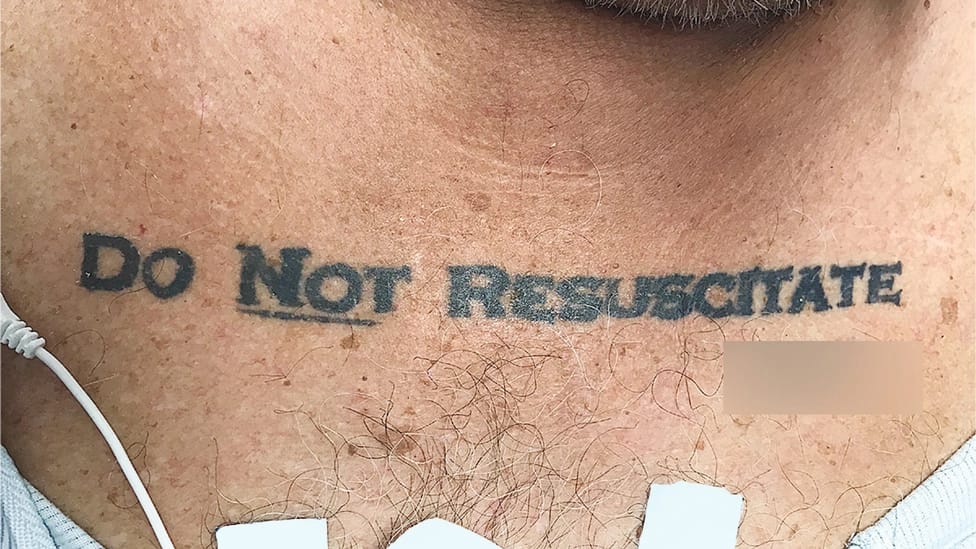
  • What Is the Difference Between a Living Will and a Do-Not-Resuscitate Order?

    What Is the Difference Between a Living Will and a Do-Not-Resuscitate Order?

    It is a very good idea to create advance directives in order to plan for the possibility that you may one day be unable to make your own medical decisions. In doing so, there can be confusion about the difference between a living will and a “do-not-resuscitate” order (DNR). While both these documents are advance medical directives, they serve different purposes.



    A living will or advanced healthcare directive is a document that you can use to give instructions regarding treatment if you become terminally ill or are in a persistent vegetative state and unable to communicate your instructions. The living will states under what conditions life-sustaining treatment should be terminated. If you would like to avoid life-sustaining treatment when it would be hopeless, you need a living will. A living will takes effect only when you are incapacitated and is not set in stone — you can always revoke it at a later date if you wish to do so.

    When drawing up a living will, you need to consider the various care options and what you would like done. You need to think about whether you want care to extend your life no matter what or only in certain circumstances. A living will can dictate when you want a ventilator, dialysis, tube feeding, blood transfusions, and other life- saving or life-prolonging options.

    A DNR is a different document. A DNR says that if your heart stops or you stop breathing, medical professionals should not attempt to revive you. This is very different from a living will, which only goes into effect if you are in a vegetative state. Everyone can benefit from a living will, while DNRs are only for very elderly and/or frail patients for whom it wouldn’t make sense to administer CPR.

    In addition to a living will, you will also need a health care proxy or broader medical directive. In order words, you still need a living will or advanced healthcare directive even if you have a DNR in place.

  • How to Handle Sibling Disputes Over a Power of Attorney

    How to Handle Sibling Disputes Over a Power of Attorney

    A power of attorney is one of the most important estate planning documents, but when one sibling is named in a power of attorney, there is the potential for disputes with other siblings. No matter which side you are on, it is important to know your rights and limitations.

    A power of attorney allows someone to appoint another person — an “attorney-in-fact” or “agent” — to act in place of him or her — the “principal” — if the principal ever becomes incapacitated. There are two types of powers of attorney: financial and medical. Financial powers of attorney usually include the right to open bank accounts, withdraw funds from bank accounts, trade stock, pay bills, and cash checks. They could also include the right to give gifts. Medical powers of attorney allow the agent to make health care decisions. In all of these tasks, the agent is required to act in the best interests of the principal. The power of attorney document explains the specific duties of the agent

    When a parent names only one child to be the agent under a power of attorney, it can cause bad feelings and distrust. If you are dealing with a sibling who has been named agent under a power of attorney or if you have been named agent under a power of attorney over your siblings, the following are some things to keep in mind: 

    • Right to information. Your parent doesn’t have to tell you whom he or she chose as the agent. In addition, the agent under the power of attorney isn’t required to provide information about the parent to other family members.
    • Access to the parent. An agent under a financial power of attorney should not have the right to bar a sibling from seeing their parent. A medical power of attorney may give the agent the right to prevent access to a parent if the agent believes the visit would be detrimental to the parent’s health.
    • Revoking a power of attorney. As long as the parent is competent, he or she can revoke a power of attorney at any time for any reason. The parent should put the revocation in writing and inform the old agent.
    • Removing an agent under power of attorney. Once a parent is no longer competent, he or she cannot revoke the power of attorney. If the agent is acting improperly, family members can file a petition in court challenging the agent. If the court finds the agent is not acting in the principal’s best interest, the court can revoke the power of attorney and appoint a guardian.
    • The power of attorney ends at death. If the principal under the power of attorney dies, the agent no longer has any power over the principal’s estate. The court will need to appoint an executor or personal representative to manage the decedent’s property.

    If you are drafting a power of attorney document and want to avoid the potential for conflicts, there are some options. You can name co-agents in the document. You need to be careful how this is worded or it could cause more problems. The best way to name two co-agents is to let the agents act separately. Another option is to steer clear of family members and name a professional fiduciary

    Sibling disputes over how to provide care or where a parent will live can escalate into a guardianship battle that can cost the family thousands of dollars. Drafting a formal sibling agreement (also called a family care agreement) is a way to give guidance to the agent under the power of attorney and provide for consequences if the agreement isn’t followed. Even if you don’t draft a formal agreement, openly talking about the areas of potential disagreement can help. If necessary, a mediator can help families come to an agreement on care. 

    To determine the best way for your family to provide care, consult with Marsala Law Firm.

  • Drafting a Power of Attorney that Lessens the Chances of Abuse

    Drafting a Power of Attorney that Lessens the Chances of Abuse

    A power of attorney is one of the most important estate planning documents you can create, but it is also one that can be misused.  While it isn’t possible to entirely prevent the possibility of abuse, there are steps you can take in drafting the document to greatly reduce the chances.

    A power of attorney allows a person you appoint — your “attorney-in-fact” or “agent” — to act in place of you – the “principal” — for financial purposes when and if you ever become incapacitated. In that case, the person you choose will be able to step in and take care of your financial affairs. Unfortunately, if the agent chooses to exploit the principal, a power of attorney in the wrong hands or with too much power can be very bad news. The following are some ways to draft a power of attorney to prevent someone from taking advantage of you.

    • Trustworthy agent. The most important thing you can do is appoint a trustworthy agent. Think carefully about whom you want acting on your behalf. You need to appoint someone you trust to have your best interests in mind. If you do not have any friends or relatives who are appropriate, you could hire a professional fiduciary. A professional fiduciary can be a bank with trust powers, a certified public accountant, or a trust company. Another option is to have multiple agents, which allows more than one person to share the responsibility and permits them to divvy up tasks. Requiring the co-agents to act together provides checks and balances, but it could become very cumbersome if all of your agents have to sign every check or other document.
    • Second signature. If you don’t want to have co-agents, but you want a check on the agent, one option is to require two signatures for large transactions. The power of attorney document can set rules on what transactions would require an additional person to sign off on them.
    • Backup agent. In addition, to having a trustworthy agent, it is a good idea to have a backup agent in case the first agent becomes incapacitated or no longer wants to serve as agent. If you do name alternates, make sure the document is very clear about when the alternate takes over and what evidence he or she will need to present when using the power of attorney.
    • Third-party accounting. One way to prevent an agent under a power of attorney from exploiting the principal is to require the agent to provide an accounting to a third party. The third party could be a family member or a friend. It doesn’t have to be a formal accounting; it can be a summary of the financial transactions. The power of attorney document can provide the details on what information needs to be provided to whom and how often.
    • Limit powers. The power of attorney can provide detailed instructions on the various powers the attorney-in-fact may carry out. You can make it as broad or as limited as you want. For example, you can allow your agent to pay bills, but not to change your will. One of the most important powers in the power of attorney document is the power to gift. One way to prevent abuse is to strictly define when gifting is allowed and how much the agent can give.
    • Review the choice. Every few years, you should review your choices in case something has changed. Don’t be afraid to revoke the power of attorney if you are no longer happy with your choice of an agent.

    Because of these drafting choices, it is a good idea to have an attorney draft the document for you.  Marsala Law Firm can help you decide how to best protect yourself or a loved one.

    For information about decisions to make when drafting a power of attorney, click here.

  • A Tax Break to Help Working Caregivers Pay for Day Care

    Paying for day care is one of the biggest expenses faced by working adults with young children, a dependent parent, or a child with a disability, but there is a tax credit available to help working caregivers defray the costs of day care (called “adult day care” in the case of the elderly).

    In order to qualify for the tax credit, you must have a dependent who cannot be left alone and who has lived with you for more than half the year. Qualifying dependents may be the following:

    • A child who is under age 13 when the care is provided
    • A spouse who is physically or mentally incapable of self-care 
    • An individual who is physically or mentally incapable of self-care and either is your dependent or could have been your dependent except that his or her income is too high ($4,150 or more) or he or she files a joint return.

    Even though you can no longer receive a deduction for claiming a parent (or child) as a dependent, you can still receive this tax credit if your parent (or other relative) qualifies as a dependent. This means you must provide more than half of their support for the year. Support includes amounts spent to provide food, lodging, clothing, education, medical and dental care, recreation, transportation, and similar necessities. Even if you do not pay more than half your parent’s total support for the year, you may still be able to claim your parent as a dependent if you pay more than 10 percent of your parent’s support for the year, and, with others, collectively contribute to more than half of your parent’s support. 

    The total expenses you can use to calculate the credit is $3,000 for one child or dependent or up to $6,000 for two or more children or dependents. So if you spent $10,000 on care, you can only use $3,000 of it toward the credit. Once you know your work-related day care expenses, to calculate the credit, you need to multiply the expenses by a percentage of between 20 and 35, depending on your income. (A chart giving the percentage rates is in IRS Publication 503.) For example, if you earn $15,000 or less and have the maximum $3,000 eligible for the credit, to figure out your credit you multiply $3,000 by 35 percent. If you earn $43,000 or more, you multiply $3,000 by 20 percent. (A tax credit is directly subtracted from the tax you owe, in contrast to a tax deduction, which decreases your taxable income.)

    The care can be provided in or out of the home, by an individual or by a licensed care center, but the care provider cannot be a spouse, dependent, or the child’s parent. The main purpose of the care must be the dependent’s well-being and protection, and expenses for care should not include amounts you pay for food, lodging, clothing, education, and entertainment. 

    To get the credit, you must report the name, address, and either the care provider’s Social Security number or employer identification number on the tax return. To find out if you are eligible to claim the credit, click here.

    For more information about the credit from the IRS, click here and here
     

  • 10 Reasons to Create an Estate Plan Now

    Many people think that estate plans are for someone else, not them. They may rationalize that they are too young or don’t have enough money to reap the tax benefits of a plan. But as the following list makes clear, estate planning is for everyone, regardless of age or net worth.

    1. Loss of capacity. What if you become incompetent and unable to manage your own affairs? Without a plan the courts will select the person to manage your affairs. With a plan, you pick that person through a power of attorney.

    2. Minor children. Who will raise your children if you die? Without a plan, a court will make that decision. With a plan, you are able to nominate the guardian of your choice.

    3. Dying without a will. Who will inherit your assets? Without a plan, your assets pass to your heirs according to your state’s laws of intestacy (dying without a will). Your family members (and perhaps not the ones you would choose) will receive your assets without benefit of your direction or of trust protection. With a plan, you decide who gets your assets, and when and how they receive them.

    4. Blended families. What if your family is the result of multiple marriages? Without a plan, children from different marriages may not be treated as you would wish. With a plan, you determine what goes to your current spouse and to the children from a prior marriage or marriages.

    5. Children with special needs. Without a plan, a child with special needs risks being disqualified from receiving Medicaid or SSI benefits, and may have to use his or her inheritance to pay for care. With a plan, you can set up a supplemental needs trust that will allow the child to remain eligible for government benefits while using the trust assets to pay for non-covered expenses.

    6. Keeping assets in the family. Would you prefer that your assets stay in your own family? Without a plan, your child’s spouse may wind up with your money if your child passes away prematurely. If your child divorces his or her current spouse, half of your assets could go to the spouse. With a plan, you can set up a trust that ensures that your assets will stay in your family and, for example, pass to your grandchildren.

    7. Financial security. Will your spouse and children be able to survive financially? Without a plan and the income replacement provided by life insurance, your family may be unable to maintain its current living standard. With a plan, life insurance can mean that your family will enjoy financial security.

    8. Retirement accounts. Do you have an IRA or similar retirement account? Without a plan, your designated beneficiary for the retirement account funds may not reflect your current wishes and may result in burdensome tax consequences for your heirs. With a plan, you can choose the optimal beneficiary.

    9. Business ownership. Do you own a business? Without a plan, you don’t name a successor, thus risking that your family could lose control of the business. With a plan, you choose who will own and control the business after you are gone.

    10. Avoiding probate. Without a plan, your estate may be subject to delays and excess fees (depending on the state), and your assets will be a matter of public record. With a plan, you can structure things so that probate can be avoided entirely.

    Contact Marsala Law Firm to discuss your estate plan.

  • Gifts to Grandchildren: 529 Accounts

    [This article was originally published on December 20, 2012.  The links were updated on July 12, 2018.]

    This type of account, named for Section 529 of the Internal Revenue Code, enables you to reduce your taxable estate while earmarking funds for the higher education of a grandchild (or any other family member). Funds contributed to such accounts are invested to pay for a grandchild’s college tuition, room and board, or other expenses. The account funds are usually invested in mutual funds, and earnings from these accounts are tax-free. (Prepaid 529 plans are an alternative to traditional investment 529 accounts; for more on these, click here.)

    You can contribute up to $15,000 (in 2019) per year ($30,000 for a couple) to 529 accounts without incurring a gift tax. Or, if you prefer, you can contribute up to $75,000 ($150,000 for a married couple) in the first year of a five-year period, as long as there are no additional gifts to that same beneficiary over the five years. In other words, 529 accounts can be a quick way of getting a sizable amount of money out of your taxable estate (although if you die within the five-year period, the portion of the contribution allocated to the years following your death would be included in your estate). An added benefit is that donors to these accounts can take the money back later if needed, although they pay a penalty of 10 percent of earnings. However, this power to control the assets means that the savings in a 529 account will be counted as an available asset under Medicaid rules in the event the account holder requires long-term care.   

    If the grandchild uses the funds for any purpose other than higher education, the earnings are taxed as ordinary income to the account owner (you) and a 10 percent penalty is assessed on investment gains. Since you are the account owner, such accounts generally do not affect a child’s eligibility for financial aid. This change may increase a student’s chances for financial aid since qualified withdrawals will no longer be considered income to the student. Moreover, you can change beneficiaries at any time, as long as the new beneficiary is a member of the original beneficiary’s family. (The tax law enacted in 2001 expanded the list of family members to include the first cousin of the original beneficiary.) Most states now permit or are planning to permit 529 account plans, and many investment firms now offer them as tax- and estate-planning vehicles for their clients.

    The Web site www.savingforcollege.com can help you compare the many state plans. In addition, click here for a good guide to choosing a 529 plan.

  • Be Careful About Putting Only One Spouse’s Name on a Reverse Mortgage

    A recent case involving basketball star Caldwell Jones demonstrates the danger in having only one spouse’s name on a reverse mortgage. A federal appeals court has ruled that an insurance company may foreclose on a reverse mortgage after the death of the borrower, Mr. Jones, even though Mr. Jones’ widow is still living in the house. While there are protections in place for non-borrowing spouses, many spouses are still facing foreclosure and eviction.

    A reverse mortgage allows homeowners to use the equity in their home to take out a loan, but borrowers must be 62 years or older to qualify for this type of mortgage. If one spouse is under age 62, the younger spouse has to be left off the loan in order for the couple to qualify for a reverse mortgage. Some lenders have actually encouraged couples to put only the older spouse on the mortgage because the couple could borrow more money that way. But couples often did this without realizing the potentially catastrophic implications. If only one spouse’s name was on the mortgage and that spouse died, the surviving spouse would be required to either repay the loan in full or face eviction.

    In order to protect non-borrowing spouses, the federal government revised its guidelines for reverse mortgages taken out after August 4, 2014 to allow spouses to stay in the house as long as they meet certain criteria, including proving ownership within 90 days of the borrowers death. In 2015, the federal government allowed lenders to defer foreclosure on a widow or widower and assign the mortgage to the federal government. Advocacy groups looking at reverse mortgage foreclosures have found that despite these new regulations, lenders are still foreclosing on non-borrowing spouses. Of the 591 non-borrowing spouses who have sought help to avoid foreclosure, only 317 received assistance.

    These regulations did not help Mr. Jones’ wife, Vanessa. Mr. Jones, who blocked more than 2,200 shots during his 17-year professional basketball career, obtained a reverse mortgage in 2014 on the Georgia home he lived in with his wife. The contract defined the “borrower” to be “Caldwell Jones, Jr., a married man.” Ms. Jones did not put her name on the reverse mortgage because she was under age 62 at the time of the mortgage. Mr. Jones died later that year, and when Ms. Jones did not repay the loan, the insurer began foreclosure proceedings.

    Ms. Jones sued the insurer in federal court to prevent the foreclosure, arguing that federal law prohibited the insurer from foreclosing on the house while she lived in it. Under a provision in federal law, the federal government “may not insure” a reverse mortgage unless the “homeowner” does not have to repay the loan until the homeowner either dies or sells the mortgaged property and defines “homeowner” to include the borrower’s spouse.

    On appeal, the 11th Circuit Court of Appeals (Estate of Caldwell Jones, Jr. v. Live Well Financial (U.S. Ct. App., 11th Cir., No. 17-14677, Sept. 5, 2018)) ruled that the federal law in question only covers what the federal government can insure and does not govern the insurer’s right to foreclose. The court agrees with Ms. Jones that the law is intended to safeguard widows and implies that the federal government should not have insured the loan in the first place, but finds that federal law does not cover the insurer’s private right to demand immediate payment and pursue foreclosure.

    When purchasing a reverse mortgage, it is always safer to put both spouse’s names on the mortgage. If one spouse is underage when the mortgage is originally taken out, that spouse can be added to the mortgage when he or she reaches age 62. If you have a reverse mortgage with only one spouse on it, contact your attorney to find out the best way to protect the non-borrowing spouse. 


  • Guns and Dementia: Dealing With A Loved One’s Firearms

    Guns and Dementia: Dealing With A Loved One’s Firearms

    Having a loved one with dementia can be scary, but if you add in a firearm, it can also get dangerous.  To prevent harm to both the individual with dementia and others, it is important to plan ahead for how to deal with any weapons.

    Research shows that 45 percent of all adults aged 65 years or older either own a gun or live in a household with someone who does. For someone with dementia, the risk for suicide increases, and firearms are the most common method of suicide among people with dementia. In addition, a person with dementia who has a gun may put family members or caregivers at risk if the person gets confused about their identities or the possibility of intruders. A 2018 Kaiser Health News investigation that looked at news reports, court records, hospital data and public death records since 2012 and found more than 100 cases in which people with dementia used guns to kill or injure themselves or others.

    The best thing to do is talk about the guns before they become an issue. When someone is first diagnosed with dementia, there should be a conversation about gun ownership similar to the conversation many health professionals have about driving and dementia. Framing the issue as a discussion about safety may help make it easier for the person with dementia to acknowledge a potential problem. A conversation about guns can also be part of a larger long-term care planning discussion with an elder law attorney, who can help families write up a gun agreement that sets forth who will determine when it is time to take the guns away and where the guns should go. Even if the gun owner doesn’t remember the agreement when the time comes to put it to use, having a plan in place can be helpful.

    What to do with the guns themselves is a difficult question. One option is to lock the weapon or weapons in a safe and store the ammunition separately. Having the guns remain in the house–even if they are locked away–can be risky. Another option is to remove the weapons from the house altogether. However, in some states, there are strict rules about transferring gun ownership, so it isn’t always easy to simply give the guns away. Families should talk to an attorney and familiarize themselves with state and federal gun laws before giving away guns.

    For more information about dementia and guns, click here and here.

>